


VIDEO & CENTER
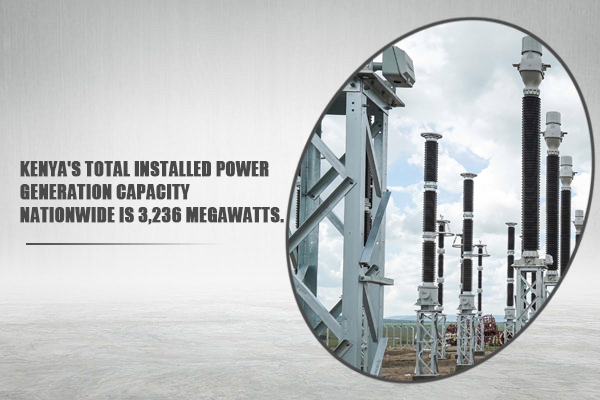
Kenya’s national electricity demand reached a record 2,439 megawatts (MW) on 3 December 2025, the highest figure in the country’s history. Peak power demand rose steadily from 2,362 MW in July to 2,392 MW in August, surpassed 2,412 MW in October, and hit 2,439 MW in December. Kenya Power and Lighting Company (KPLC), the country’s main electricity distributor, stated that the rise in power demand is linked to increased industrial activity, new household connections, and the emergence of electric vehicles. Kenya’s power company is implementing short-term measures to address the surge in electricity use.It will import up to 120 MW of power from Uganda, where infrastructure is currently being upgraded. Negotiations are also underway to secure an additional 150 MW from Ethiopia. Locally, by December 2026, two geothermal power plants in Menengai will add 70 MW of installed capacity.Rehabilitation of Unit 1 at Olkaria will restore 60.5 MW, and turbine maintenance at Sondu II Unit (30 MW) is also ongoing.Transmission upgrades are also improving power delivery in western, coastal, and central Kenya. Kenya currently has a stable installed generation capacity of about 2,495 MW, an effective contracted capacity of 3,108 MW, and a total installed power capacity of 3,236 MW. According to statistics, as of 2023, about 76.2% of Kenya’s population had access to electricity, up from 37% in 2013.Data from the World Bank and the International Energy Agency shows that grid expansion continues to progress.However, this rate remains below the global average of around 87%, highlighting a gap in energy access even as demand grows. Kenya Power added over 400,000 new customers in the year ending June 2025, which has expanded electricity connectivity while also driving higher energy consumption.